Professor Richard Reid

Professor of African History
St Cross College
01865 615038
I am a historian of modern Africa, with a focus on the nineteenth and twentieth centuries. I’ve spent much of my career working on the culture and practice of warfare in the modern period, with a particular interest in the transformations in violence in the late so-called ‘precolonial’ period (the nineteenth century), as well as on more recent armed insurgencies, especially those between the 1950s and the 1980s, and their aftermaths. I’ve also worked on historical culture and memory, especially around trauma and upheaval, and one strand of my research has involved an exploration of how the ‘precolonial’ is perceived and understood in modern Africa (as well as in modern Europe). While some of my published work spans the continent as a whole, my primary research has been on East and Northeast Africa, including Uganda and the Great Lakes region, Ethiopia, and Eritrea.
Research Interests
- Historical culture, emotion and memory in modern Africa, particularly East and Northeast Africa
- The history of emotions and authorial subjectivity in the context of empire and imperialism
- Warfare and militarism in Africa in the nineteenth and twentieth centuries, particularly East and Northeast Africa
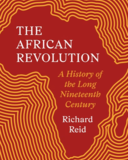
My recent research involved a re-examination of the relationship between Africa and Europe during the long nineteenth century. The culmination of that relationship, famously, was the so-called ‘scramble for Africa’, between the 1870s and the 1910s, and I revisited that formative ‘moment’ in the histories of both continents. But I was equally interested in the ways in which political, economic, and military upheavals in both continents during the nineteenth century were closely intertwined. Ultimately, I sought to understand Africa’s revolutions during that era in a more global context. The issues that arose from that work continue to interest me, including how the ‘precolonial’ is perceived and understood in modern Africa, especially given the negative connotations often attached to precolonial violence by modern political and economic elites. This is particularly fascinating given that at least some of those elites are themselves the products of violence and its long-term aftermath in the postcolonial era.
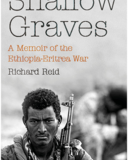
I’ve also worked on the ways in which war and upheaval led to distinctive, often markedly emotional, forms of historical culture, and how it influenced both public history and more private understandings of the past. Much of that research focused on the relationship between Eritrea and Ethiopia, which in many ways was shaped by distinctive cultures of violence, militarism, and historical consciousness. I have long been especially interested in how history is organized and ‘packaged’ as the result of prolonged trauma, including at the level of national history.
My current writing project has taken a slightly different direction, while building on some of the themes highlighted above. I’m interested in emotions history in an imperial and colonial context, and, relatedly, in the issue of subjectivity in historical writing. I’m seeking to fuse my own experiences of growing up in Northern Ireland with a broader understanding of how imperialism and colonialism involve distinctive emotional cultures and responses, in Africa and globally, including in Europe itself.